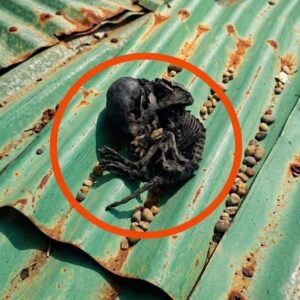
The object captured in the recreated image is a rat-tailed maggot, the aquatic larva of a hoverfly in the family Syrphidae, most commonly the drone fly Eristalis tenax. Visually, it matches the classic morphology: a plump, sausage-shaped, pinkish-translucent body that tapers slightly at the posterior, ending in a dramatically elongated, thread-like respiratory siphon often mistaken for a tail. This siphon can extend several times the body length and functions like a snorkel, allowing the larva to breathe atmospheric oxygen while submerged in low-oxygen, polluted water or organic sludge. The darker, somewhat opaque end visible in the photo is the anterior (head) region, which contains retractable mouthparts used for filter-feeding on bacteria and decaying matter. The small brown pellets surrounding it are likely frass (larval waste) or bits of organic debris from its feeding environment, not eggs or parasites. Found indoors on a wooden surface, this specimen was almost certainly transported accidentally from a nearby drain, compost pile, or stagnant water source such as a clogged gutter, rain barrel, or even a potted plant saucer. Rat-tailed maggots thrive in nutrient-rich, low-oxygen habitats and are harmless to humans, pets, and plants; they do not bite, sting, or transmit disease. Their presence indoors signals moist, decaying organic material nearby but poses no direct threat. Identification relies on the unmistakable “tail” siphon, which distinguishes them from ordinary housefly maggots or parasitic worms.
Rat-tailed maggots undergo a remarkable complete metamorphosis typical of Diptera. The larva stage shown here can last weeks to months depending on temperature and food availability, growing from microscopic eggs laid by adult hoverflies that resemble bees or wasps. Adults are important pollinators, visiting flowers for nectar while inadvertently transferring pollen, making them beneficial to gardens and agriculture. Once mature, the larva leaves the water, crawls to a dry spot, and pupates inside a hardened case, eventually emerging as the adult fly. This life cycle explains why they occasionally appear in unexpected places: heavy rain can flush them from outdoor breeding sites into home drains or onto floors. Ecologically, they play a vital role as decomposers, breaking down organic waste and recycling nutrients back into the ecosystem. In wastewater treatment plants they are even used as bio-indicators of water quality because they tolerate high levels of pollution that would kill most other aquatic life. Their ability to survive in anaerobic conditions is an evolutionary adaptation involving hemoglobin-like pigments that give some specimens their pinkish hue. Related species in the genus Eristalis and Helophilus share similar traits, but Eristalis tenax is the most widespread globally, found on every continent except Antarctica. Misidentification often leads to panic; many people mistake them for parasitic worms or even small snakes, but microscopic examination or simple observation of the breathing tube confirms their identity as harmless hoverfly larvae.
These larvae inhabit a wide range of environments beyond the obvious drain or compost heap. They prefer shallow, sun-warmed pools rich in decaying vegetation, manure, or sewage overflow, which is why they are sometimes called “drain-fly larvae” despite belonging to a different family. In nature they contribute to nutrient cycling in wetlands, ponds, and temporary pools that dry up seasonally. Their presence can indicate poor drainage or neglected organic waste management around homes. Climate change and urbanization have expanded their range, as warmer temperatures accelerate development and more artificial water containers provide breeding sites. In agricultural settings they help control bacterial loads in manure lagoons. Predators include birds, fish, and predatory insects, though their cryptic coloration and ability to burrow into sediment offer protection. Unlike some other fly larvae, rat-tailed maggots do not vector human diseases; they are not associated with myiasis (infestation of living tissue) because they lack the specialized mouthparts required to invade healthy skin. Public health experts emphasize that seeing one indoors is an environmental cue rather than a medical emergency. Simple prevention involves cleaning drains with enzymatic cleaners, removing standing water, and sealing cracks that allow entry. Their appearance in the photo on a decorative wooden surface suggests accidental transport rather than infestation, as they cannot survive or reproduce on dry wood.