Rama Duwaji Reflects on Sudden Public Attention, Creative Identity, and Redefining Personal Boundaries After an Unexpected Spotlight Shift That Challenged Her Sense of Self, Artistic Independence, and the Meaning of Visibility in a Life Once Anchored in Quiet Creative Practice
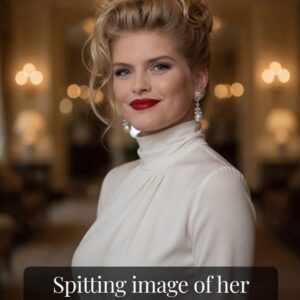
Rama Duwaji’s life as an artist was once defined by routine, solitude, and the slow, deliberate process of making. Her days unfolded in the calm of her Brooklyn studio, where illustration and animation allowed her to explore identity, humor, and connection without an audience looking over her shoulder. That rhythm changed abruptly when a series of carefully styled images circulated online through a collaboration with The Cut. Almost overnight, Duwaji found herself the subject of intense public attention. Strangers analyzed her appearance, her expressions, and her presence, forming narratives that moved faster than understanding. What many perceived as a celebratory moment felt, to her, disorienting and exposed, a reminder that visibility often arrives before context and rarely includes the full complexity of a person’s inner life.
The sudden attention was inseparable from the political rise of her husband, Zohran Mamdani, whose election as New York City’s mayor shifted both of their lives into a public arena. For Duwaji, the experience carried a particular tension. Despite years of building a creative career, much of the initial coverage framed her primarily as a political spouse. While she acknowledged the support and kindness extended toward her, she also spoke openly about the discomfort of being introduced through proximity rather than personal achievement. The experience highlighted a familiar pattern in public life, especially for women, where individual identity can be overshadowed by association, regardless of professional history or creative contribution.
As attention intensified, Duwaji became increasingly aware of how quickly public narratives can flatten complex identities. Being widely seen did not automatically translate into being understood. The internet’s tendency to simplify, categorize, and project expectations left little room for nuance. For an artist whose work thrives on subtlety and introspection, this shift was unsettling. She described the experience as vulnerable, not because of criticism alone, but because of the loss of control over how her story was told. The moment forced her to confront the difference between being visible and being known, and how easily one can exist without the other.
In response, Duwaji and Mamdani made deliberate choices about privacy and boundaries. Their courthouse wedding, shared only in a limited and understated way, reflected a shared desire to prioritize sincerity over spectacle. These decisions were not about withdrawal, but about self-preservation. For Duwaji, maintaining creative clarity meant protecting certain aspects of her life from constant observation. She has spoken about the quiet pressure that comes with large-scale attention, particularly for creatives who fear that external validation can dull experimentation or distort motivation. To stay grounded, she chose to measure her work against the standards of peers she respects rather than the fluctuating reactions of a mass audience.
Humor and self-awareness became essential tools in navigating this transition. Duwaji acknowledged the absurdity that sometimes accompanies sudden recognition and learned to approach it with lightness rather than resistance. By doing so, she preserved a sense of agency over her creative identity. Her focus remained on the work itself, continuing to explore illustration, animation, and ceramics rooted in themes that matter to her personally. Rather than allowing visibility to redefine her, she treated it as an external condition, something to be managed thoughtfully rather than embraced uncritically.
Looking forward, Duwaji approaches her changed circumstances with intention and clarity. She does not see herself as a political figure, yet she recognizes that visibility can be used constructively. She has expressed interest in uplifting working artists and creative communities that often struggle for recognition and stability. At the same time, she remains committed to protecting her independence, understanding that longevity in creative life depends on authenticity and boundaries. As New York enters a new chapter, Duwaji’s path is guided not by the spotlight itself, but by a steady commitment to her craft, her values, and the belief that visibility should serve creativity, not define it.